◆ TECHNICAL GUIDE · MOTOR TECHNOLOGY

Difference between brushless and brushed

We've written a Brushless DC Pump Definitive Guide to cover this topic. Please visit it and get a comprehensive view of brushless DC pumps.

Brushed DC motor Rotation
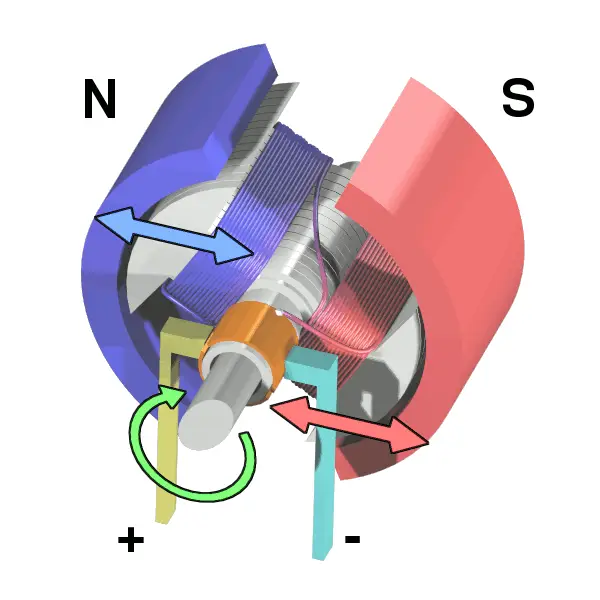
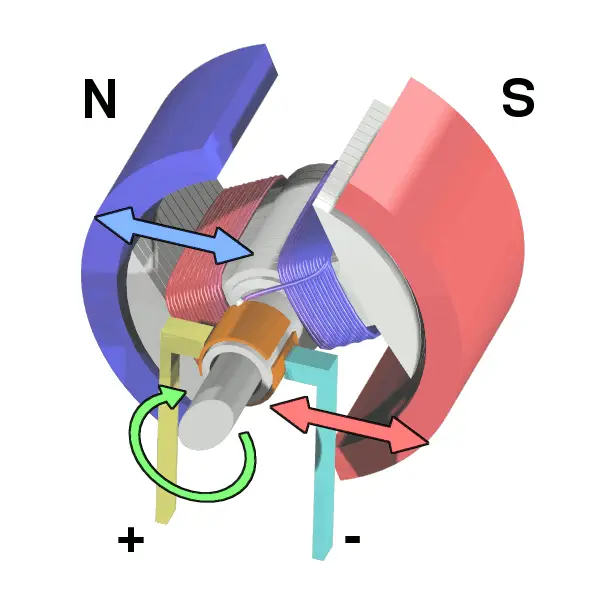
Brushed DC motor rotation stage 1: armature positioned vertically, N magnet on left (blue), S magnet on right (red), commutator contacts engaged, current flows upward through armature, positive (+) terminal at top, negative (−) at bottom, armature pushed away from left magnet toward right.
Stage 1
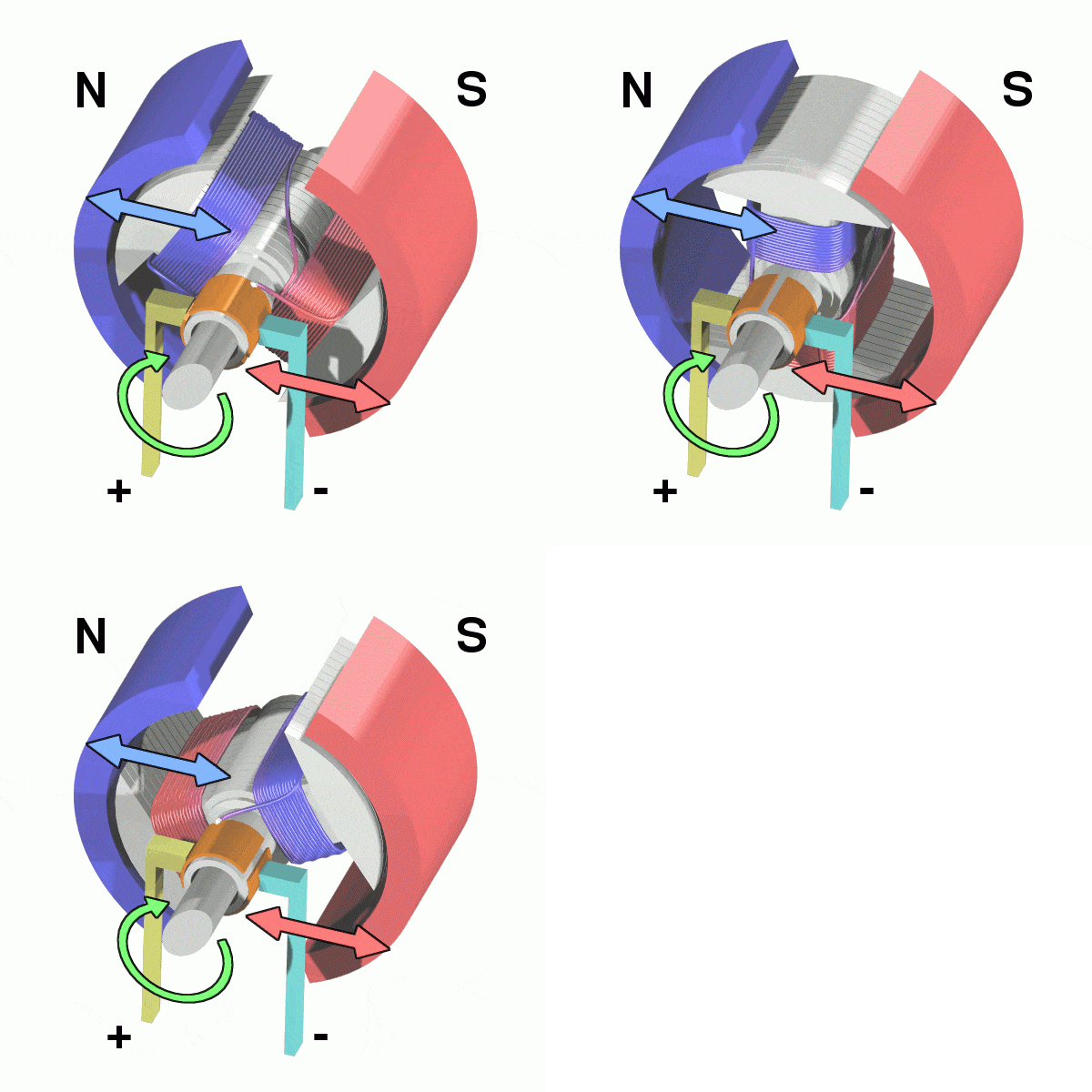
Brushed DC motor rotation stage 2: armature rotated 45 degrees clockwise, N magnet on left (blue), S magnet on right (red), commutator contacts maintain current direction, armature continues rotating under magnetic force.
Stage 2
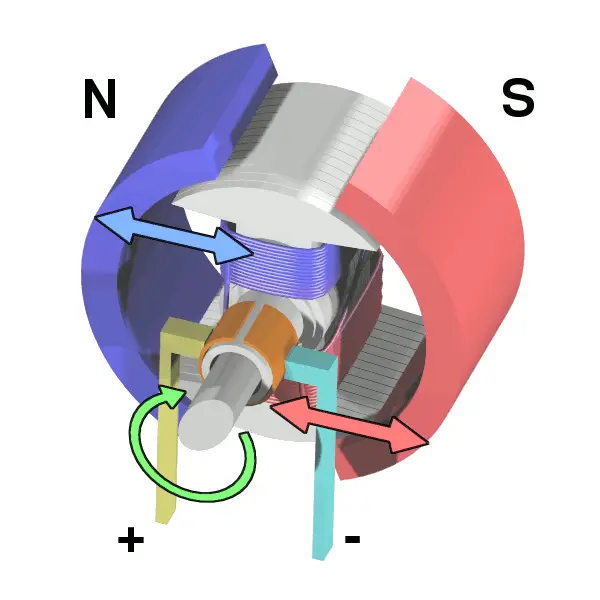
Brushed DC motor rotation stage 3: armature now horizontal, commutator reverses current direction through brush contact switching, magnetic field in armature reverses, N magnet on left (blue), S magnet on right (red), polarity labels + and − shown at terminals.
Stage 3
Brushed DC motor rotation stage 4: armature returned to near-vertical position after full commutation cycle, N magnet on left (blue), S magnet on right (red), current arrows show reversed direction, rotation cycle about to repeat from stage 1.
Stage 4

Step 1. The armature is pushed away from the left magnet and drawn toward the right.

Step 2. The armature continues to rotate.

Step 3. When the armature becomes horizontal, the commutator reverses the direction of the current, reversing the magnetic field.

Step 4. The process then repeats.

Brushless DC motor

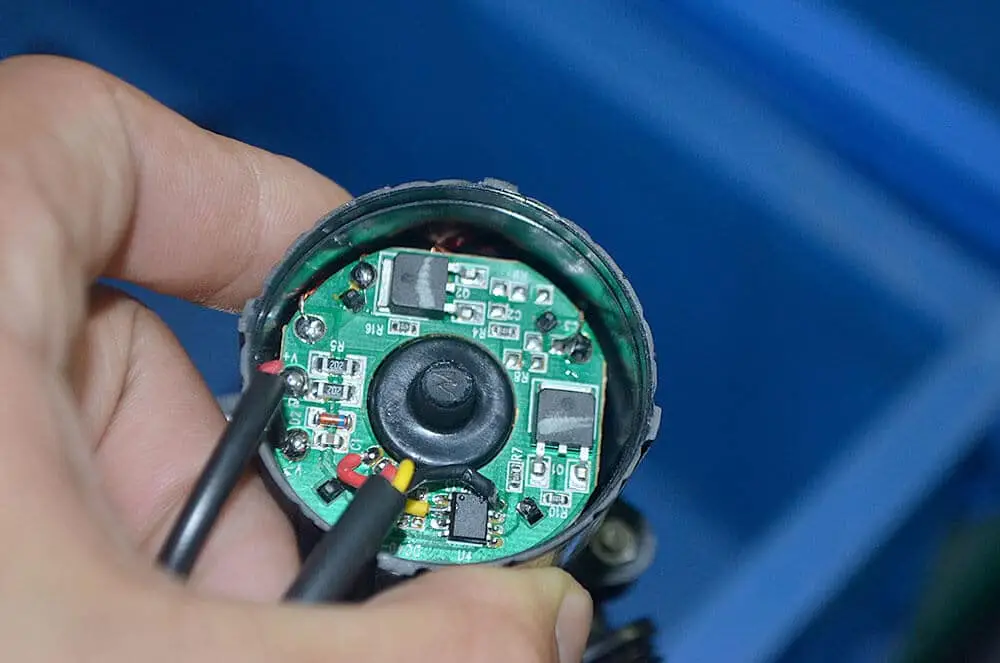
Electronic commutation replace of the mechanical commutator

Due to this innovation, some limitations of brushed motors were overcome by brushless motors. They include higher efficiency, no mechanical wear and no spark. These benefits come at the cost of more complex and more expensive control electronics.

Brushless motors offer several advantages over brushed DC motors, including high torque to weight ratio, more torque per watt (increased efficiency), increased reliability, reduced noise, longer lifetime (no brush and commutator erosion), elimination of ionizing sparks from the commutator, and overall reduction of electromagnetic interference (EMI).
High Efficiency No Wear No Spark Low Noise Long Life Low EMI
A hand holding a small green PCB circuit board -- the electronic commutation controller for a BLDC brushless DC motor -- showing capacitors, MOSFETs, and control ICs against a blue background.
BLDC Electronic Commutation Board

Tell us your requests to get solution.

Let's push things forward.

Contact Us